
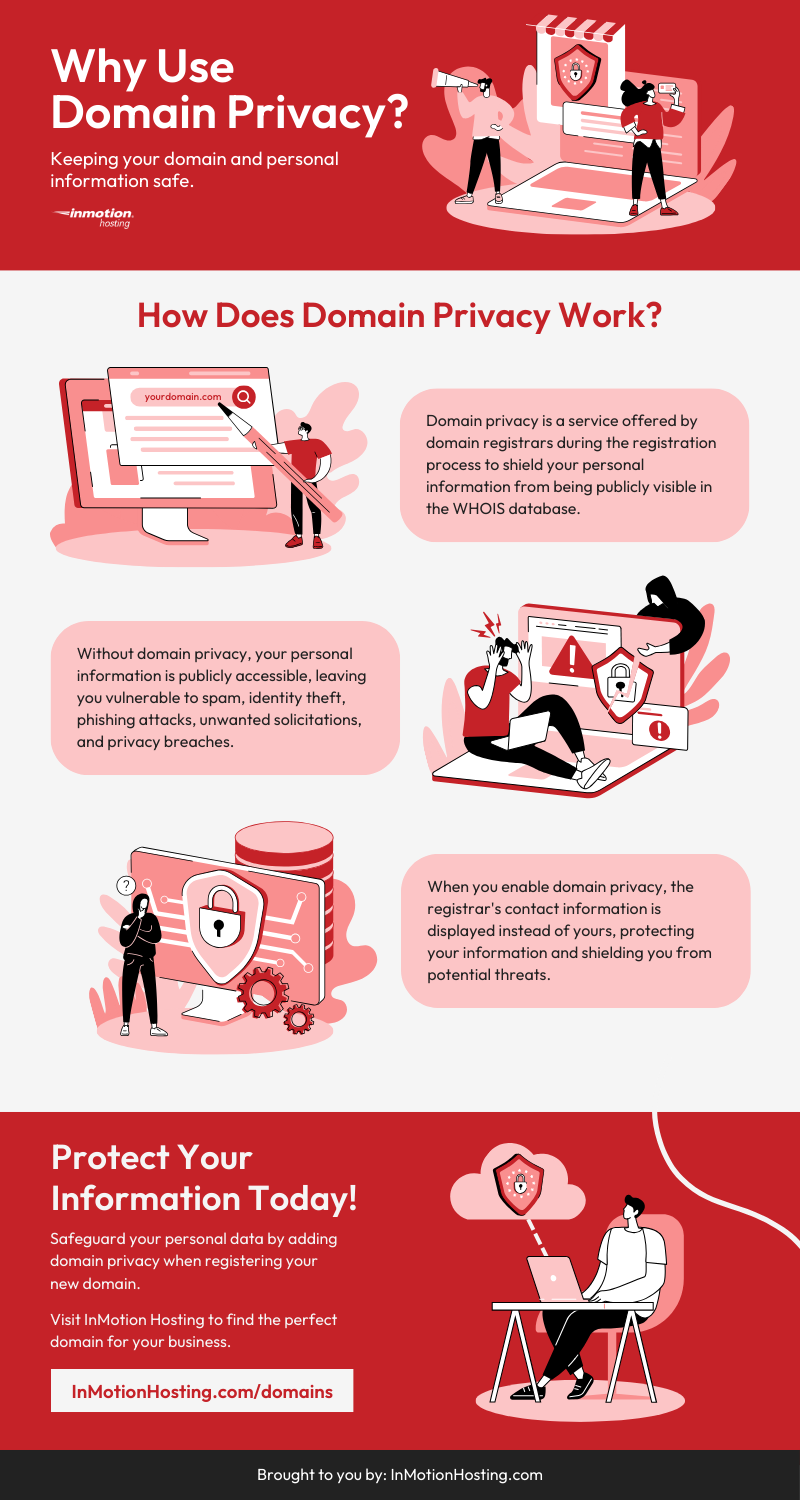
Whois Privacy for domains is a service that hides personal information from public databases. It keeps your contact details private, shielding them from spammers and scammers.
When you register a domain, your personal information becomes publicly accessible through the Whois database. This database lists the contact details of domain owners. Unfortunately, this exposure can attract unwanted attention. Whois Privacy services step in to solve this problem.
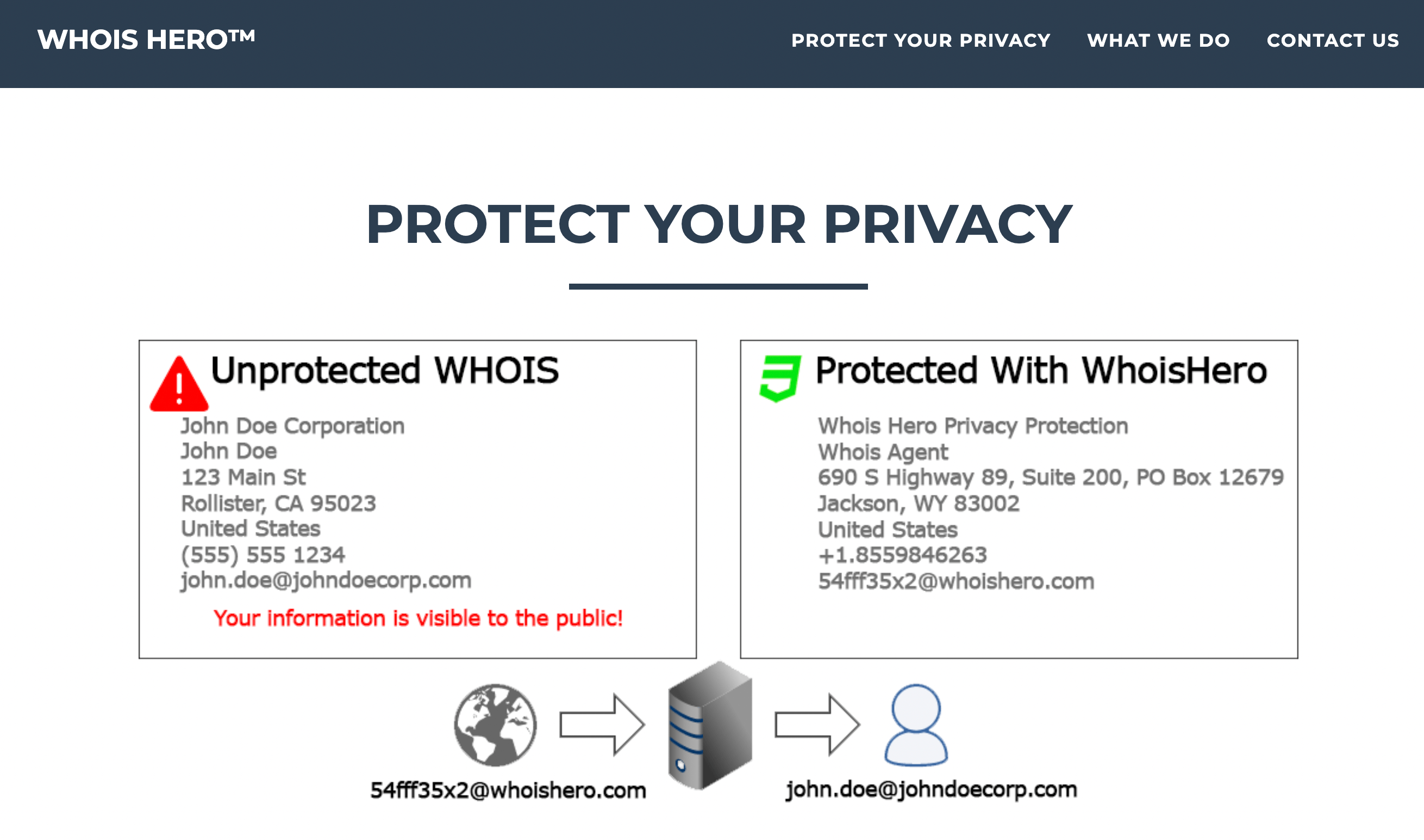
They replace your personal details with those of a proxy service. This means your name, address, email, and phone number stay hidden. The result? You get peace of mind, knowing your information is secure. In this blog, we will explore the importance and benefits of Whois Privacy for domain owners. Stay tuned to learn more about protecting your digital identity.
Credit: www.inmotionhosting.com
Introduction To Whois Privacy
In the digital age, your online presence is vital. When you register a domain, your personal information gets stored in a public database called WHOIS. This can include your name, address, phone number, and email. Without protection, anyone can access your data. This is where Whois Privacy comes into play.
Definition
Whois Privacy is a service that hides your personal information from the public WHOIS database. Instead of displaying your details, it shows the contact information of the privacy service provider. This means your name, address, and other personal data stay hidden from public view.
Importance
Protecting your personal information is crucial. Exposing your details can lead to unsolicited emails, spam calls, or even identity theft. With Whois Privacy, you reduce these risks significantly.
Another benefit is preventing domain hijacking. Cybercriminals often target domains with public information to steal them. Whois Privacy adds a layer of security, making it harder for them to access your domain.
Lastly, Whois Privacy helps in maintaining your professional image. Public information can sometimes be misused, impacting your credibility. Keeping your details private ensures a more secure and professional online presence.
| Feature | Benefit |
|---|---|
| Hides Personal Information | Prevents spam and unwanted contact |
| Reduces Risk of Identity Theft | Keeps sensitive data secure |
| Prevents Domain Hijacking | Adds an extra layer of security |
| Maintains Professional Image | Prevents misuse of contact details |
How Whois Works
Understanding Whois and its function is essential for domain management. Whois is a protocol used to query databases that store information about domain name registrations. Let’s delve into how Whois works and what it entails.
Public Database
Whois information is stored in a public database. This database contains details about domain owners. Anyone can access it to find information about a domain name.
Accessible Information
The Whois database holds various pieces of information. This includes the domain owner’s name, email address, phone number, and physical address. It also shows the domain’s registration and expiration dates. This information is publicly accessible to anyone who queries the database.
Risks Of Exposed Whois Data
Whois data provides essential information about domain ownership. This data includes contact details such as name, address, email, and phone number. When this information is exposed, several risks arise. Understanding these risks helps in making informed decisions about Whois privacy for domains.
Spam And Scams
Exposed Whois data attracts spammers. They harvest email addresses for spam campaigns. You may receive a flood of unwanted emails. Scammers also target domain owners. They may send phishing emails or fake renewal notices. This can lead to financial loss and frustration.
Identity Theft
Identity theft is a significant risk. Cybercriminals can use exposed Whois data to impersonate you. They might open fraudulent accounts or commit crimes in your name. Protecting your personal information is crucial. Keeping Whois data private helps safeguard your identity.
Credit: www.seekahost.com
Benefits Of Whois Privacy
Whois Privacy is essential for domain owners. It keeps personal information secure and hidden from the public. This service offers many benefits for both individuals and businesses. Let’s explore the key benefits of using Whois Privacy.
Enhanced Security
Whois Privacy protects your personal data. It prevents hackers from accessing your information. Your name, address, email, and phone number stay private. This reduces the risk of identity theft.
With Whois Privacy, your domain data is safe. It adds a layer of protection against cyber-attacks. Domain hijacking becomes harder for attackers. Your website remains secure and operational.
Reduced Spam
Spam emails are a common problem for domain owners. Public Whois data attracts spammers. They use the information to send unwanted emails.
Whois Privacy hides your email address. This keeps your inbox clean. You receive fewer spam messages. It saves time and reduces frustration.
In summary, Whois Privacy offers key benefits. It enhances security and reduces spam. Protect your domain today.
How To Enable Whois Privacy
Enabling Whois Privacy for your domain is a crucial step to protect your personal information. This feature hides your contact details from the public Whois database. It ensures that your name, address, phone number, and email are not accessible to anyone who queries your domain. This section will guide you through the process of enabling Whois Privacy, focusing on domain registrars and privacy services.
Domain Registrars
Most domain registrars offer Whois Privacy as an additional service. These companies help you register and manage your domain names. To enable Whois Privacy, follow these steps:
- Log in to your domain registrar account.
- Navigate to the domain management section.
- Select the domain for which you want to enable privacy.
- Look for the Whois Privacy or Domain Privacy option.
- Activate the privacy service by following the on-screen instructions.
Each registrar may have a different interface, but the steps are generally similar. Some popular domain registrars include GoDaddy, Namecheap, and Bluehost. Ensure you review the terms and conditions before enabling the service.
Privacy Services
Besides domain registrars, there are dedicated privacy services that offer enhanced protection. These services act as a shield, hiding your personal details from the public. Here’s how to enable Whois Privacy through a privacy service:
- Choose a reputable privacy service provider.
- Sign up for their service and create an account.
- Provide the details of your domain.
- Follow their specific instructions to enable privacy protection.
Privacy services often provide additional features like spam protection and enhanced security. They are a great option if you want more control over your personal information.
| Domain Registrar | Privacy Option |
|---|---|
| GoDaddy | Privacy Protection |
| Namecheap | WhoisGuard |
| Bluehost | Domain Privacy + Protection |
Enabling Whois Privacy is a simple yet effective way to protect your personal data. It reduces spam and unwanted solicitations. Review the options provided by your registrar or a privacy service to find the best fit for your needs.
Cost Considerations
Understanding the cost considerations of Whois privacy for domains helps you make informed decisions. This section explores the financial aspects, focusing on free versus paid services and value for money.
Free Vs Paid Services
Many domain registrars offer free Whois privacy services. These services mask your personal information. This ensures that your details stay hidden from the public. Free services provide basic protection, which may be sufficient for some users.
Paid services often offer more robust features. They may include additional security measures. Paid options might also offer better customer support. This can be crucial if you run into issues. So, consider what level of protection you need.
Value For Money
Evaluating the value for money is essential. Free services save costs but may lack advanced features. Paid services come with a price tag. Yet, they often offer better protection and support.
Think about your specific needs. A small blog might do fine with free services. A business website might benefit from paid options. Assess the risk and decide accordingly.
Legal Implications
Whois Privacy for domains has significant legal implications. It helps to understand how privacy laws and compliance issues affect domain owners. This section explores these aspects in detail.
Privacy Laws
Privacy laws protect personal data. They aim to safeguard individuals’ information. Domain owners’ details fall under these laws. Whois Privacy ensures compliance with these regulations. It prevents unauthorized access to personal data.
Different countries have varying privacy laws. The General Data Protection Regulation (GDPR) is an example. It applies to European Union citizens. Whois Privacy helps meet GDPR requirements. It shields domain owners’ contact details.
Compliance Issues
Domain owners must comply with privacy laws. Non-compliance can lead to penalties. Whois Privacy aids in achieving compliance. It masks personal information from public databases.
Compliance issues arise from data breaches. Exposed data can lead to legal consequences. Whois Privacy reduces this risk. It keeps sensitive information secure. Thus, it helps avoid legal troubles.
Alternatives To Whois Privacy
For those seeking alternatives to Whois Privacy, there are several options available. These alternatives can help keep your personal information secure and protect your privacy. Below, we explore some of the most effective alternatives.
Proxy Services
Proxy services act as a middleman between you and the public. These services replace your personal details with their own information. This way, your identity remains hidden. Some benefits of using proxy services include:
- Enhanced privacy – Your personal data stays private.
- Spam reduction – Less chance of receiving spam emails.
- Protection against identity theft – Your identity is protected from malicious actors.
Proxy services are widely available and can be easily integrated with your domain registration.
Anonymous Registrations
Anonymous registrations allow you to register a domain without revealing your identity. This method ensures complete anonymity. You can use false names or pseudonyms during registration. Here are some key points about anonymous registrations:
- Complete anonymity – Your real name and contact info are never exposed.
- Freedom of expression – You can express opinions without fear of retribution.
- Affordable – Often cheaper than some privacy services.
Anonymous registrations can be a good choice for those who prioritize privacy above all else.
Common Misconceptions
Many people have misconceptions about Whois Privacy for domains. These misunderstandings often lead to confusion and poor decisions. Let’s debunk some common myths.
Privacy Guarantees
Some believe Whois Privacy guarantees complete anonymity. This is not true. It protects your personal data from public databases. However, law enforcement and legal entities can still access it.
Data Protection
Another misconception is that Whois Privacy provides full data protection. While it hides your information from the public eye, it is not a replacement for data security measures. Always use strong passwords and stay vigilant against phishing attacks.
Credit: www.namehero.com
Frequently Asked Questions
Do I Need Domain Name Privacy Protection?
Domain name privacy protection is essential to safeguard your personal information from public access and reduce spam.
What Is The Difference Between Whois Privacy And Redacted?
WHOIS privacy hides personal information from public databases. Redacted WHOIS masks specific data fields, showing limited information to comply with privacy regulations.
Is Whois Safe To Use?
Yes, WHOIS is safe to use. It provides public domain information and helps identify domain registrants. Always use reputable WHOIS lookup services.
Does Godaddy Have Free Whois Privacy?
GoDaddy offers free WHOIS privacy for eligible domains. Check their website for more details and eligibility criteria.
Conclusion
Whois privacy for domains is crucial for online security. It protects personal information from public exposure. This service keeps your contact details private. As a result, you reduce spam and potential threats. Many domain registrars offer this feature. It’s a small price for peace of mind.
Consider enabling Whois privacy for your domains. Stay safe and secure online with this simple step.


