
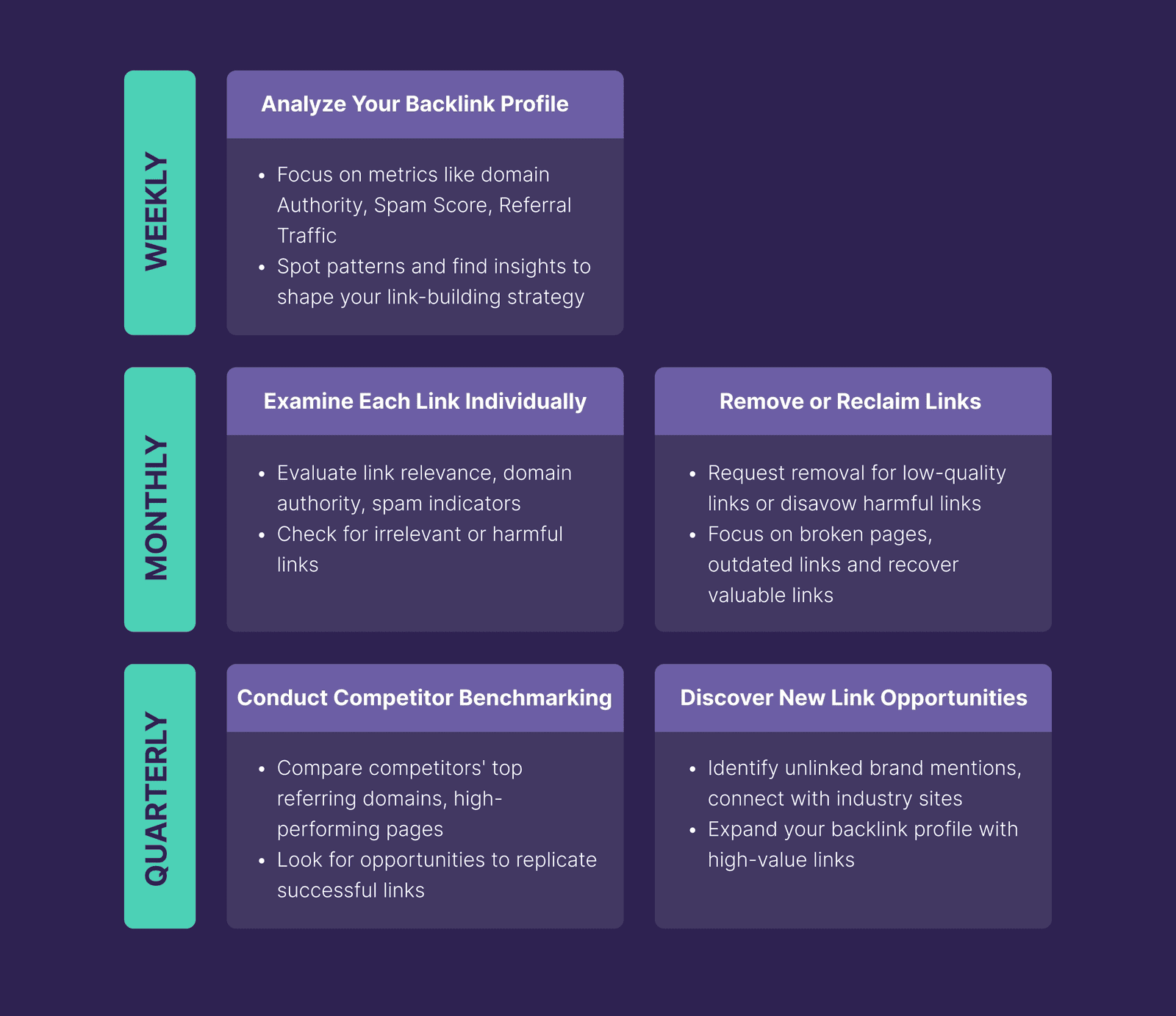
Analyzing your site’s link profile is crucial for SEO success. It helps you understand the quality of links pointing to your site and their impact on your rankings.
A strong link profile can boost your site’s visibility and authority, while a weak one can harm your search engine performance. Knowing how to analyze your link profile allows you to identify areas for improvement and take action to enhance your SEO strategy.
In this guide, we will break down the steps to effectively analyze your link profile. You will learn how to assess link quality, spot harmful links, and understand the overall health of your site’s backlinks. By the end, you will have the knowledge to improve your site’s link profile and, ultimately, its search engine rankings.
Importance Of Link Profile Analysis
A site’s link profile is a crucial part of its SEO health. Understanding your link profile helps you see how search engines view your site. By analyzing your link profile, you can improve your site’s rankings. This process uncovers valuable insights about your backlinks. It helps you identify strengths and weaknesses.
Boosting Seo
Analyzing your link profile can significantly boost your SEO. Search engines use backlinks to determine your site’s authority. More quality backlinks usually mean a higher ranking.
Focus on getting links from reputable sites. This signals to search engines that your content is trustworthy.
Here are some benefits of a strong link profile:
- Improved search rankings
- Increased organic traffic
- Better domain authority
Understanding Backlink Quality
Not all backlinks are equal. Some can help your site, while others can harm it. Quality backlinks come from sites with high domain authority. They are relevant to your industry.
Low-quality backlinks might come from spammy sites. These can negatively affect your rankings.
To assess your backlink quality, consider these factors:
| Factor | Importance |
|---|---|
| Domain Authority | High |
| Relevance | High |
| Link Placement | Medium |
| Anchor Text | Medium |
| Link Diversity | Low |
Regularly check your link profile. Disavow harmful backlinks using Google’s Disavow Tool. Aim for a mix of high-quality backlinks. This strengthens your site’s authority and boosts your SEO performance.
Tools For Link Profile Analysis
Analyzing your site’s link profile is crucial for SEO success. It helps you understand the quality and quantity of links pointing to your site. Using the right tools can make this process easier and more effective. Below, we will explore some popular tools for link profile analysis and how to use them effectively.
Popular Tools
Many tools are available for analyzing your link profile. Here are some of the most popular ones:
- Ahrefs: Known for its comprehensive backlink analysis.
- SEMrush: Offers detailed link data and competitor analysis.
- Majestic: Focuses on link metrics and historical data.
- Google Search Console: Free tool with basic link information.
- MOZ Link Explorer: Provides link metrics and spam score.
How To Use Tools Effectively
To get the most out of these tools, follow these steps:
- Set Up Accounts: Create accounts on the tools you plan to use.
- Enter Your Domain: Input your website’s domain to start analysis.
- Review Backlink Data: Check the number and quality of backlinks.
- Analyze Anchor Text: Look at the anchor text distribution.
- Compare Competitors: See how your link profile stacks up against competitors.
Each tool has its own interface and features. Here is a brief overview of how to use each tool:
| Tool | How to Use |
|---|---|
| Ahrefs | Use the Site Explorer to enter your domain and review backlink data. |
| SEMrush | Utilize the Backlink Analytics tool for in-depth link analysis. |
| Majestic | Check Trust Flow and Citation Flow metrics for your site. |
| Google Search Console | Navigate to the Links report to see your top linking sites. |
| MOZ Link Explorer | Input your domain to get link metrics and identify spammy links. |
Regularly monitoring your link profile helps maintain a healthy backlink profile. It can prevent potential penalties and improve your search engine rankings.
Identifying High-quality Backlinks
Identifying high-quality backlinks is crucial for improving your site’s search engine ranking. High-quality backlinks signal to search engines that your site is trustworthy and authoritative. But how do you identify these valuable links? Let’s dive into the characteristics and examples of good backlinks.
Characteristics Of Good Backlinks
Not all backlinks are created equal. High-quality backlinks share specific characteristics that make them more valuable:
- Relevance: The linking site should be relevant to your industry.
- Authority: Links from authoritative sites carry more weight.
- Natural Placement: Links should appear naturally within the content.
- Anchor Text: Descriptive and relevant anchor text is essential.
- Dofollow Links: Ensure the link is a dofollow, not a nofollow.
Examples Of Quality Backlinks
Understanding the characteristics is one thing, but seeing examples can help solidify your understanding. Here are some examples of quality backlinks:
| Source | Description |
|---|---|
| Industry Blogs | Articles from well-known industry blogs that link to your content. |
| News Websites | Mentions in news articles from reputable news websites. |
| Educational Sites | Backlinks from .edu domains are highly authoritative. |
| Government Sites | Links from .gov websites indicate high trust and authority. |
| Guest Posts | Guest posts on reputable sites with a link back to your site. |
These examples show the types of sources and contexts that make backlinks valuable. Focus on building connections that meet these criteria for the best SEO results.
Spotting Toxic Backlinks
Backlinks can boost your site’s authority. But not all backlinks are good. Toxic backlinks can harm your SEO efforts. Identifying these toxic links is essential. This section will help you spot and understand them.
Signs Of Bad Backlinks
Bad backlinks can come from low-quality sites. These sites often have thin or copied content. Look for links from sites with many ads. Another sign is links from unrelated niches. For example, a cooking blog linking to a tech site. Also, check for links from link farms. These are sites made only to link out to others. Google dislikes these kinds of links.
Risks Of Toxic Links
Toxic links can hurt your site’s ranking. Google may penalize your site. This can lead to a drop in search results. Your site may also lose its credibility. Users might avoid your site if they see it linked from bad sites. Removing toxic links can be tough. But it is necessary for long-term SEO health.
Strategies For Building Quality Backlinks
Building quality backlinks is crucial for improving your site’s SEO performance. High-quality backlinks enhance your site’s authority and ranking. Here are some effective strategies to build quality backlinks.
Content Creation
Content creation is key to attracting backlinks. Create valuable and original content that people want to share. Focus on producing blog posts, infographics, and videos. These types of content are highly shareable.
Regularly update your content to keep it relevant. Search engines favor fresh content. Use keywords naturally within your content. This boosts visibility and attracts organic traffic.
Write guides and tutorials. They are often linked by other sites as resources. Ensure your content is easy to read and understand. This encourages more shares and links.
Outreach Techniques
Outreach involves contacting other website owners. Aim to get your content featured or linked. Personalize your outreach emails. Mention how your content can add value to their site.
Guest posting is a powerful outreach technique. Write articles for other websites in your niche. Include a link back to your site within the content.
Engage with influencers in your industry. Build relationships with them. They can provide valuable backlinks by sharing your content. Participate in online communities and forums. Contribute useful insights and link back to your site where relevant.
Monitor mentions of your brand online. Reach out to sites that mention you without linking. Politely ask them to add a link to your site. This can convert brand mentions into valuable backlinks.

Credit: moz.com
Analyzing Competitors’ Link Profiles
Understanding your competitors’ link profiles can provide valuable insights. You can find new link-building opportunities. You can also learn what works in your industry. This process involves examining the backlinks pointing to your competitors’ websites. You can then compare them with your own.
Benefits Of Competitor Analysis
Analyzing competitors’ link profiles reveals useful trends. You can identify high-quality websites that link to them. These sites might also link to your content. You can find gaps in your link profile. This helps improve your own link-building strategy. Competitor analysis can highlight strong content ideas. You can create similar content to attract more links.
Tools For Competitor Analysis
Several tools can help with competitor analysis. These tools provide detailed reports on backlinks. They also offer insights into link quality. Ahrefs is a popular choice. It offers a comprehensive backlink analysis feature. SEMrush also provides robust tools for analyzing competitors’ backlinks. Moz is another useful tool. It offers a range of SEO and link analysis features.
Use these tools to gather data. Compare your link profile with your competitors’. Make informed decisions to improve your SEO strategy.
Maintaining A Healthy Link Profile
Maintaining a healthy link profile is essential for your site’s success. A clean link profile helps you rank higher in search engines. It also ensures your site remains trustworthy. Regular checks and actions will keep your link profile healthy.
Regular Monitoring
Regular monitoring is key to maintaining your link profile. Use tools like Google Search Console or Ahrefs. These tools show which sites link to you. Check these links often to ensure they are from reputable sources.
Create a schedule to review your link profile. Aim for monthly checks. This helps you spot any bad links quickly. Early detection prevents them from harming your site.
Disavowing Harmful Links
Not all links are good. Some links can harm your site’s reputation. These are known as harmful links. Identify these links and disavow them. Use Google’s Disavow Tool for this task. This tool tells Google to ignore these bad links.
Here is how you can use the Disavow Tool:
- Identify harmful links using a link analysis tool.
- Create a list of these harmful links.
- Upload this list to Google’s Disavow Tool.
This process helps in maintaining a clean link profile. It prevents your site from being penalized.
“`
Credit: www.seoclarity.net
Case Studies And Success Stories
Analyzing your site’s link profile can be a daunting task. Learning from real-world examples and success stories can make the process easier and more effective. This section will explore some case studies and the lessons learned from them.
Real-world Examples
Let’s look at some real-world examples to understand how successful sites analyze their link profiles.
| Company | Strategy | Outcome |
|---|---|---|
| Company A | Focused on high-quality backlinks from authoritative sites | Increased organic traffic by 50% |
| Company B | Removed spammy links and disavowed bad domains | Improved search rankings significantly |
| Company C | Built relationships with industry influencers | Boosted referral traffic by 30% |
Lessons Learned
These case studies provide valuable insights. Here are the key lessons learned:
- High-quality backlinks are crucial for improving search engine rankings.
- Removing spammy links can positively impact your site’s reputation.
- Building relationships with industry influencers can drive significant traffic.
- Regularly auditing your link profile helps identify and resolve issues quickly.
By following these examples, you can improve your site’s link profile and achieve better results.

Credit: betterlinks.io
Frequently Asked Questions
How To Analyze Backlink Profile?
Use tools like Ahrefs or SEMrush to evaluate backlinks. Check for quality, relevance, and anchor text diversity. Monitor for spammy links and remove them.
What Is A Good Backlink Profile?
A good backlink profile includes diverse, high-quality, relevant links from authoritative websites. It appears natural and avoids spammy links.
What Does Your Backlink Profile Measure?
A backlink profile measures the quantity, quality, and relevance of links pointing to your website. It helps assess SEO performance.
What Is Link Analysis In Seo?
Link analysis in SEO evaluates the quality and quantity of backlinks to a website. It helps improve search engine rankings. Analyzing links identifies valuable opportunities and potential issues affecting site performance.
Conclusion
Analyzing your site’s link profile is crucial for SEO success. Regularly check backlinks. Identify and remove harmful links. Focus on quality over quantity. Use tools like Google Search Console. Monitor progress and adapt strategies. A strong link profile boosts your site’s credibility.
Stay proactive, and keep improving. Your efforts will pay off in better rankings and more traffic. Happy optimizing!


