
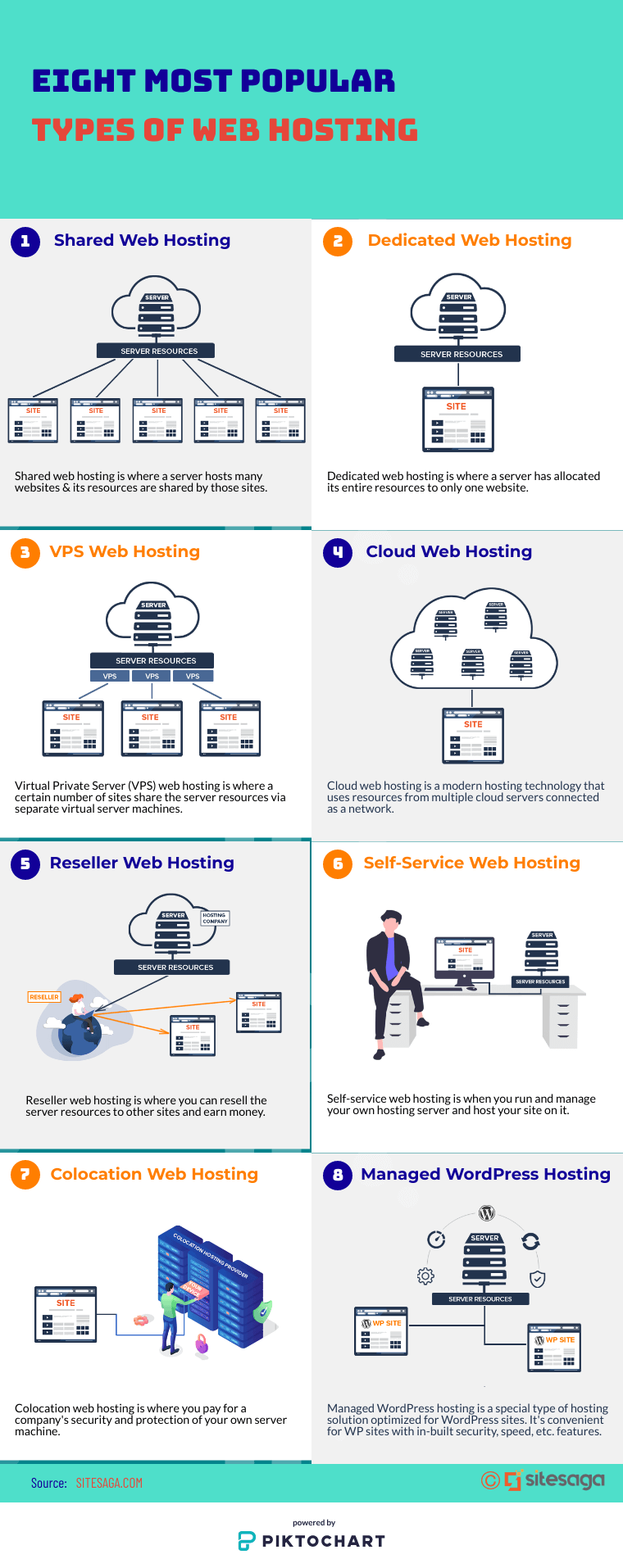
Web hosting is essential for any website. Different types suit various needs.
Understanding web hosting can seem complex. There are several types, each offering unique features. Knowing the differences helps you choose the best fit for your site. Some options are cost-effective, while others provide more power and flexibility. Your website’s size, traffic, and purpose will influence your decision.
Let’s break down the main types of web hosting to help you make an informed choice. This guide will simplify the options, making it easier for you to decide which type of web hosting is right for your needs.
Introduction To Web Hosting
Choosing the right web hosting is crucial for your website. It affects your site’s speed, security, and reliability. In this section, you will learn about the basics of web hosting. Let’s dive in!
What Is Web Hosting?
Web hosting is a service. It allows individuals and organizations to make their website accessible on the internet. When you create a website, all its files need a place to live. Web hosting provides that space on a server. This server is always connected to the internet. When someone types your website’s URL, the web hosting server sends your website’s files to their browser.
Importance Of Choosing The Right Hosting
Choosing the right web hosting impacts your website’s performance. The right hosting ensures your site loads quickly. It keeps your site secure from hackers. A good hosting provider offers strong customer support. They help solve problems that may arise. Your website’s uptime is also critical. The right hosting provider guarantees high uptime. This means your site will be online most of the time.
Good web hosting also affects your SEO ranking. Search engines prefer fast and reliable websites. So, choose your hosting carefully. It will benefit your site in the long run.

Credit: www.youtube.com
Shared Hosting
Shared hosting is a popular choice for beginners. It is cost-effective and easy to manage. Your website shares server resources with other sites. This makes shared hosting affordable. It is an excellent option for personal blogs and small businesses.
Advantages Of Shared Hosting
Shared hosting is budget-friendly. It is the most affordable hosting type. You don’t need technical skills to manage it. The hosting provider handles server maintenance. You can focus on your website content.
Shared hosting plans come with pre-installed software. This includes control panels like cPanel. It makes managing your site easy. You can install applications with one click. This is perfect for beginners.
Customer support is often available 24/7. You can get help any time you need it. This can be a lifesaver for new website owners.
Disadvantages Of Shared Hosting
Shared hosting has some limitations. Your website shares resources with others. This can lead to slower speeds. If another site on the server gets a traffic spike, your site may slow down.
Resource limitations can affect your site’s performance. You have limited bandwidth and storage. This is usually fine for small sites. But, growing sites may need more resources.
Security can be a concern. If one site on the server is compromised, others could be at risk. Shared hosting is not ideal for sites with sensitive data.
Vps Hosting
VPS Hosting stands for Virtual Private Server Hosting. It is a type of web hosting where a physical server is divided into multiple virtual servers. Each virtual server operates independently. This provides you with more control and flexibility compared to shared hosting. VPS hosting is an excellent choice for businesses that need more resources and control but do not want to invest in a dedicated server.
Benefits Of Vps Hosting
Using VPS Hosting comes with several advantages. Some of these benefits include:
- Increased Performance: VPS hosting offers more resources and better performance compared to shared hosting.
- Enhanced Security: Each VPS is isolated from others, ensuring better security for your data.
- Root Access: You get root access to your server, allowing for custom configurations.
- Scalability: Easily scale your resources up or down as your needs change.
- Cost-Effective: VPS hosting provides a balance between cost and performance.
Drawbacks Of Vps Hosting
Despite its many benefits, VPS hosting also has some drawbacks. These include:
- Higher Cost: VPS hosting is more expensive than shared hosting.
- Technical Knowledge: Requires more technical knowledge to manage effectively.
- Limited Resources: Although better than shared hosting, resources are still finite.
- Potential Downtime: Poorly managed VPS can lead to downtime or performance issues.

Credit: elementor.com
Dedicated Hosting
Dedicated hosting is a powerful web hosting solution. It offers exclusive use of an entire server. This hosting type provides the highest level of performance and security. It is ideal for large websites with high traffic. Let’s dive into the pros and cons of dedicated hosting.
Pros Of Dedicated Hosting
- Performance: Dedicated servers ensure top performance for your website.
- Security: With a dedicated server, you have enhanced security measures.
- Customization: You have full control over server configurations and software.
- Reliability: Dedicated hosting offers high uptime and reliability.
- Resources: All server resources are allocated to your site alone.
Cons Of Dedicated Hosting
- Cost: Dedicated hosting is more expensive than other types.
- Management: Requires technical expertise to manage and maintain the server.
- Scalability: Scaling can be harder and slower compared to cloud solutions.
Cloud Hosting
Cloud hosting is a popular web hosting option. It offers flexibility, scalability, and reliability. Instead of relying on a single server, cloud hosting uses a network of virtual servers. This setup can handle high traffic and ensures minimal downtime. Let’s dive into the features and limitations of cloud hosting.
Features Of Cloud Hosting
Cloud hosting boasts many features. First, it provides high scalability. You can easily adjust resources based on your needs. No need to worry about traffic spikes. Second, it offers enhanced reliability. If one server fails, another takes over. This ensures your website stays online. Third, cloud hosting provides cost efficiency. You pay only for the resources you use. No wasted money on unused capacity. Fourth, it offers better performance. Multiple servers work together to handle traffic and process data faster. Lastly, cloud hosting includes robust security features. Data is stored across multiple servers, making it safer from attacks.
Limitations Of Cloud Hosting
Despite its benefits, cloud hosting has some limitations. First, it can be more expensive than shared hosting. Costs can add up if your website uses many resources. Second, cloud hosting requires technical knowledge. Managing a cloud environment can be complex. This might be challenging for beginners. Third, potential downtime during maintenance. Regular updates and maintenance can cause brief outages. Fourth, limited control over the server. Since resources are shared, you can’t customize the server as much. Lastly, data privacy concerns. Your data is stored on multiple servers, which may raise privacy issues.
Managed Hosting
Managed hosting is a popular choice for businesses of all sizes. It involves a hosting provider managing your server. This means they handle updates, security, and backups. You can focus on your core business. No need to worry about the technical aspects.
Perks Of Managed Hosting
One major perk is peace of mind. Experts manage your server 24/7. This means fewer headaches for you. Another benefit is enhanced security. Managed hosting providers often offer advanced security features. Your data stays safe from threats.
Performance is another key advantage. Managed hosting ensures optimal server performance. Your website loads faster. This can improve user experience. Managed hosting also offers regular backups. You won’t lose your data in case of an issue. Plus, you get professional support. Help is available whenever you need it.
Downsides Of Managed Hosting
Managed hosting can be more expensive. The extra services come at a cost. This might not fit all budgets. You also have less control. The hosting provider handles most technical tasks. Some users might prefer more hands-on management. Another downside is potential limitations. Managed hosting plans can have restrictions. These might include limits on software or configurations.
Lastly, you may experience slower response times for certain changes. Managed hosting providers often follow protocols. This can delay some updates or modifications. Weigh these downsides against the benefits. Managed hosting is not for everyone. But it can be a great choice for many businesses.
WordPress Hosting
WordPress Hosting is a type of web hosting service. It is designed to meet the unique needs of WordPress websites. It offers various tools to help your site run smoothly. This type of hosting is popular due to its ease of use and efficiency. Many website owners choose WordPress Hosting for its tailored features.
Special Features For WordPress
WordPress Hosting comes with unique features. It often includes one-click WordPress installation. This makes setting up your site very easy. The hosting environment is optimized for WordPress. This ensures faster loading times and better performance. Security features are also enhanced. They protect your site from common threats. Automatic updates keep your WordPress version current. This helps to keep your site secure.
Potential Issues With WordPress Hosting
WordPress Hosting can have some drawbacks. It may be more expensive than shared hosting. This can be a concern for small budgets. Resource limits could be another issue. Your site may slow down if it exceeds these limits. Some WordPress Hosting plans are not flexible. They may not support other types of websites. This can be limiting if you plan to expand. Technical support is often specialized. This means general web hosting issues may take longer to resolve.
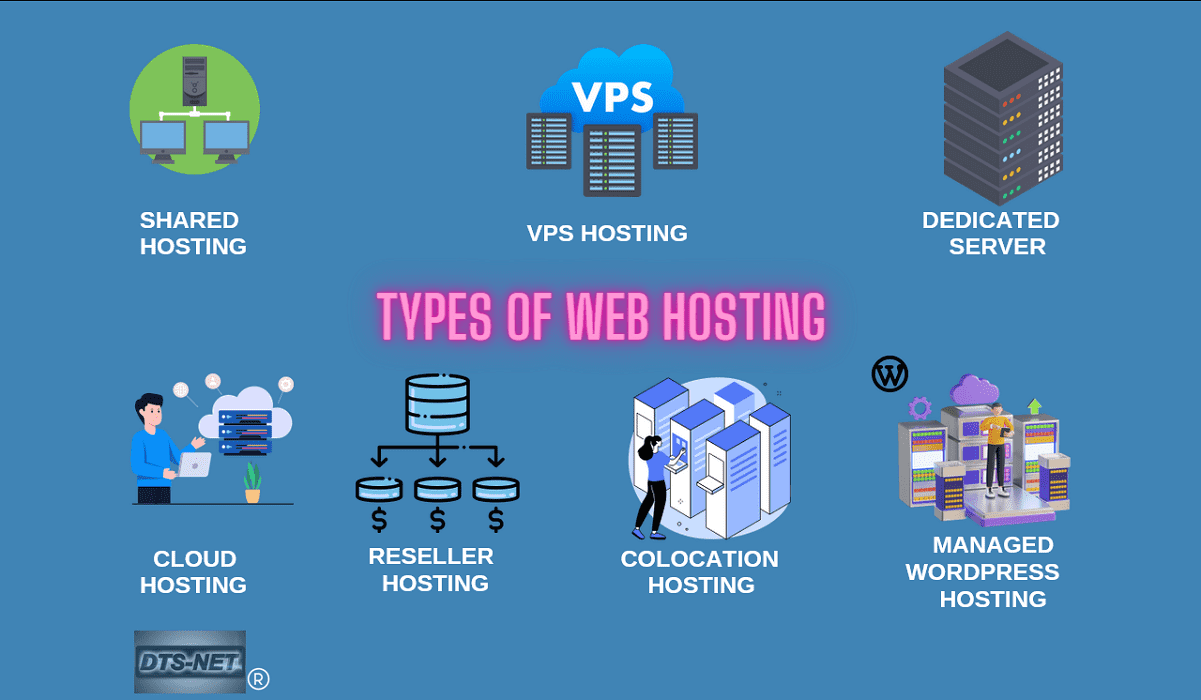
Credit: dts-net.com
Choosing The Right Web Hosting
Choosing the right web hosting is crucial for your website’s success. The web hosting you select impacts your site’s speed, reliability, and security. Understanding the different types of web hosting can help you make an informed decision. Let’s break down the factors you need to consider and how to match hosting types to your needs.
Factors To Consider
Several factors influence your choice of web hosting. First, consider your website’s traffic. High traffic sites need more resources. Second, think about your budget. Some hosting options are more affordable. Third, consider the level of technical support you require. Beginners may need more support. Lastly, think about scalability. Your hosting should grow with your site.
Matching Hosting Types To Needs
There are different types of web hosting. Shared hosting is best for small sites or blogs. It’s affordable but has limited resources. VPS hosting offers more control and resources. It’s suitable for growing websites. Dedicated hosting provides the most resources and control. It’s ideal for large sites with high traffic. Cloud hosting is scalable and reliable. It’s a good choice for sites with fluctuating traffic.
Frequently Asked Questions
What Is Shared Web Hosting?
Shared web hosting means multiple websites share a single server. It’s cost-effective and ideal for beginners. Resources are shared, so performance can vary.
What Are The Benefits Of Vps Hosting?
VPS hosting provides dedicated resources and better performance. It’s more secure than shared hosting. It’s ideal for growing websites needing more control.
How Does Cloud Hosting Work?
Cloud hosting uses multiple servers to balance load and maximize uptime. It’s scalable and reliable. Ideal for high-traffic websites needing flexibility.
What Is Dedicated Server Hosting?
Dedicated server hosting provides a server exclusively for your website. Offers maximum performance and security. Ideal for large websites with high traffic.
Conclusion
Understanding different web hosting types is essential for your website’s success. Each type offers unique features and benefits. Shared hosting suits small sites. VPS hosting gives more control. Dedicated hosting is best for large businesses. Cloud hosting provides flexibility and scalability.
Choose the right type based on your needs and budget. This helps ensure your site runs smoothly and efficiently. Making an informed decision improves your online presence. Happy hosting!


